
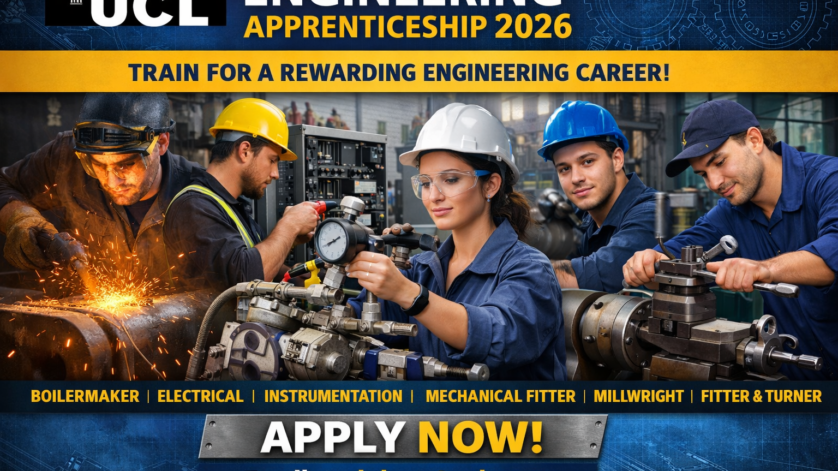
The UCL Engineering Apprenticeship 2026 at UCL (University College London) is designed to equip young and aspiring artisans with practical technical skills and accredited engineering knowledge. This apprenticeship programme combines structured classroom learning with hands-on workplace training, ensuring that candidates gain industry-ready experience in high-demand engineering trades.
The 2026 intake focuses on artisan and technical engineering disciplines that are critical in manufacturing, construction, energy, and industrial sectors. Apprentices receive professional mentorship, practical workshop exposure, and technical training aligned with modern industry standards.
Fields Offered
The UCL Engineering Apprenticeship 2026 offers the following engineering trade specialisations:
1. Boilermaker
Boilermaker apprentices are trained in metal fabrication, welding, and structural steelwork. Training includes reading technical drawings, cutting and shaping metal, assembling heavy steel components, and repairing industrial equipment. This trade is essential in construction, mining, shipbuilding, and manufacturing industries.
2. Electrical Engineering
Electrical apprentices focus on installing, maintaining, and repairing electrical systems. Training covers wiring systems, control panels, motors, transformers, and industrial electrical equipment. Safety regulations and fault-finding techniques form a core part of this programme.
3. Instrumentation
Instrumentation apprentices learn to install, calibrate, and maintain measuring and control devices used in industrial processes. This includes pressure gauges, temperature sensors, control systems, and automated equipment. Instrumentation plays a key role in manufacturing plants and energy facilities.
4. Mechanical Engineering
Mechanical apprentices gain knowledge in machinery maintenance, engineering systems, thermodynamics basics, and mechanical equipment servicing. The programme emphasises practical skills in mechanical assembly and system troubleshooting.
5. Mechanical Fitter
Mechanical Fitter apprentices are trained to assemble, install, maintain, and repair mechanical machinery and rotating equipment. This includes pumps, compressors, turbines, and heavy mechanical systems used in industrial environments.
6. Millwright
Millwright apprentices combine mechanical and electrical expertise. They are trained to install, maintain, troubleshoot, and repair industrial machines and automated production equipment. This trade is highly valuable in factories and processing plants.
7. Fitter and Turner
Fitter and Turner apprentices learn machining, turning, and precision engineering. Training includes operating lathes, milling machines, and precision tools to manufacture mechanical components according to technical specifications.
Minimum Qualifications
To qualify for the UCL Engineering Apprenticeship 2026, applicants must meet the following academic requirements:
- Completed secondary school qualification (Matric or equivalent)
- Mathematics and Physical Science as key subjects
- Technical Mathematics and Engineering Science (advantageous)
- N2 or N3 Engineering qualification (recommended for certain trades)
Applicants must demonstrate a strong interest in technical work and mechanical systems.
General Requirements
Candidates applying for the apprenticeship should meet the following criteria:
- Basic understanding of engineering principles
- Good communication and teamwork skills
- Ability to follow safety standards and regulations
- Strong problem-solving abilities
- Physically fit and capable of working in workshop environments
- Willingness to complete the full apprenticeship duration
Previous workshop exposure or technical training will be considered an advantage but is not always mandatory.
Skills Developed During the Programme
Apprentices enrolled in the 2026 programme will gain:
- Practical workshop and fabrication skills
- Electrical installation and fault-finding skills
- Machinery maintenance and repair expertise
- Technical drawing interpretation
- Welding and metal cutting techniques
- Precision machining and measurement skills
- Industrial safety and compliance knowledge
These skills are highly sought after in industries such as construction, manufacturing, mining, energy production, and industrial automation.
Programme Benefits
The UCL Engineering Apprenticeship 2026 offers several benefits:
- Structured practical and theoretical training
- Exposure to modern engineering workshops and equipment
- Mentorship from experienced engineers and artisans
- Recognised trade qualification upon completion
- Improved employment prospects in technical industries
- Opportunity to gain valuable workplace experience
Apprentices earn industry-relevant knowledge that enhances their long-term career development.
Career Opportunities After Completion
Upon successful completion of the apprenticeship, candidates may pursue roles such as:
- Qualified Boilermaker
- Electrical Technician
- Instrumentation Technician
- Mechanical Technician
- Mechanical Fitter
- Millwright
- Fitter and Turner
Graduates may also advance into supervisory roles or continue further studies in engineering fields.
Why Choose UCL Engineering Apprenticeship?
UCL is internationally recognised for academic excellence and technical innovation. The apprenticeship programme reflects the institution’s commitment to practical learning and workforce development. With access to advanced facilities and professional guidance, apprentices receive comprehensive training aligned with global engineering standards.
Final Thoughts
The UCL Engineering Apprenticeship 2026 provides an excellent pathway for young individuals passionate about artisan and technical engineering careers. With specialised training in Boilermaker, Electrical.
📧 Direct email application address:
trainingc@ucl.co.za
Closing date : 27 February 2026